


Building habits begins with small, consistent steps—a topic we explored in our previous post, “Top 8 New Year’s Resolutions for the Classroom“. While those principles help foster a positive atmosphere and support student well-being at school, today we’re taking things a step further by bringing these same mechanisms into family life. We highly recommend checking out that earlier post, as the two articles complement each other perfectly. Together, they illustrate how a cohesive, research-backed approach to habit-building can support children both in the classroom and at home.
Now, let’s explore which family resolutions actually work and why they can serve as the foundation for your entire family’s well-being.
FAMILY RESOLUTIONS
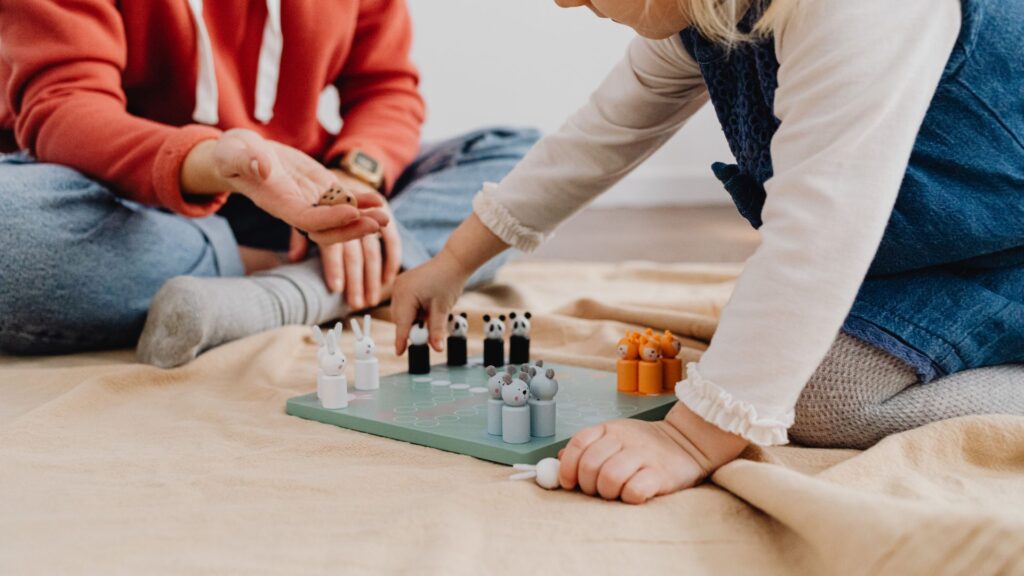
Less “Side by Side,” More “Truly Together”
The Harvard Center on the Developing Child confirms that when it comes to the parent-child relationship, quality matters far more than the quantity of time spent together. A brief, but fully present and mindful moment with a parent impacts a child’s development much more strongly than hours spent merely “side by side,” where attention is divided between chores and a smartphone.
That’s why it’s so beneficial to introduce a “quality time” ritual into your family life. This could be just a couple of hours a week dedicated entirely to each other, completely free of electronic devices and other distractions. During this time, the focus is entirely on talking, playing, bonding, or doing an activity together—ensuring your child feels truly seen and valued.
Emotional Regulation Through Modeling
Children learn emotional regulation primarily by observing adults. This happens thanks to mirror neurons—structures in the brain that automatically allow them to imitate the behaviors of others, especially those closest to them.
Because of this, rather than demanding immediate self-control or telling a child to simply “calm down,” it’s much more effective to model emotional regulation yourself. You can talk to your child about how you handle stress, what calming techniques you use, and how you take care of your own mental health.
Fostering Autonomy Through Choices
According to Deci and Ryan’s self-determination theory, human beings require a sense of autonomy to naturally engage in tasks and responsibilities. When children are given a choice, their intrinsic motivation and independent decision-making skills grow. In practice, this can be as simple as letting your child choose between two options:
- which outfit to wear (the green or the grey pants),
- what to have for breakfast (a sandwich or oatmeal),
- the order in which they complete their chores (cleaning their desk first or emptying the cat’s litter box).
Family Rituals for a Sense of Security
Research from the University of Rochester highlights that regular family rituals can reduce anxiety levels in children by up to 40%. Rituals—those repeatable, predictable elements of daily life—reinforce a sense of stability and rootedness, which is essential for healthy emotional development. Monday hot cocoa, Friday board games, a Sunday stroll, or even making breakfast together on Saturday mornings are simple routines that not only build lasting memories but also cultivate a comforting atmosphere of safety and warmth at home.
A Quick Family Gratitude Practice
According to research by Emmons and McCullough, practicing gratitude can boost overall well-being by up to 25% after just eight weeks. Introducing a brief “gratitude round” into your family routine helps children focus on the positives and fosters an atmosphere of kindness and appreciation.
Appreciation and Recognition
Positive reinforcement is far more effective than punishment, and using it regularly significantly reduces the frequency of challenging behaviors. Instead of dwelling on mistakes, make a conscious effort to notice your child’s small steps, genuine efforts, and good intentions. Short phrases that reinforce their sense of competence are incredibly helpful:
- “I noticed that…”
- “Thank you for…”
- “I really liked how you…”
Talking About Mistakes
Research from the University of Zurich demonstrates that discussing mistakes openly increases mental resilience, creativity, and a willingness to embrace challenges. Children who understand that making mistakes is a natural part of the learning process are less likely to give up and less afraid to try new things. You might want to incorporate a quick check-in question into your daily routine:
- “What would I like to do differently next time?”
or - “What did I learn today?”
Digital Hygiene
Studies by the APA (American Psychological Association) show that establishing shared rules regarding digital devices reduces family conflicts and improves children’s sleep quality. The most effective rules are those agreed upon together, rather than imposed unilaterally. It could be as simple as one baseline rule, for example: “No phones at the dinner table.” This ensures that mealtimes remain a space for rest and connection, rather than just another distraction.
Related Posts



 TupTupTup content and resources are free and available to everyone — thank you for using them.
If you appreciate what we do, you can support TupTupTup with a donation or by allocating 1.5% of your tax. Simply enter KRS 0000270261 in your tax return, adding the specific purpose: Fundacja To Proste 18808.