

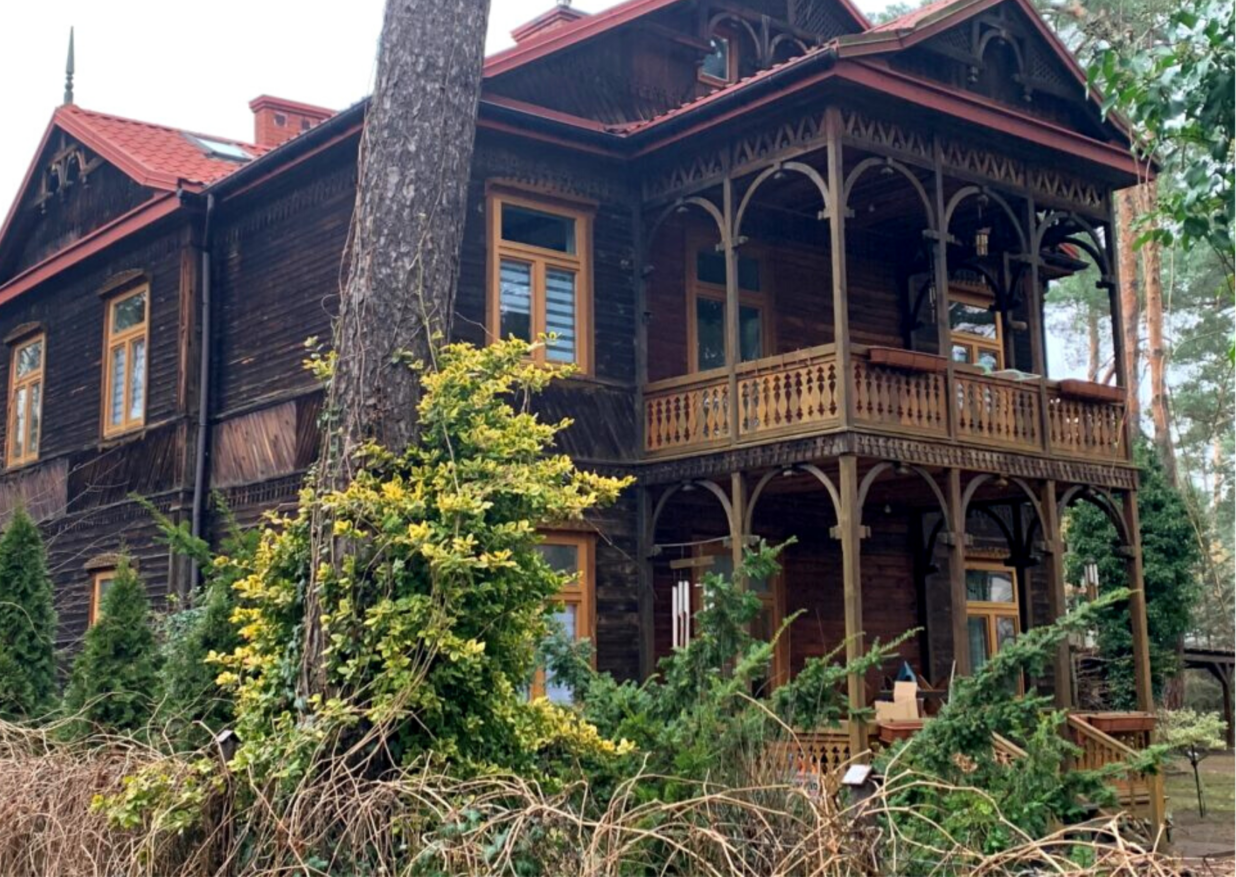
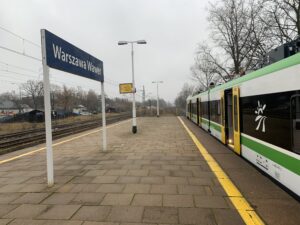
If you want the children in your facility to know: Where does the name of the Wawer district come from? What did the people of Wawer travel on before there was a narrow-gauge railway? What is the difference between a narrow-gauge railway and an ordinary railway? Where is the cinema in Wawer and what makes it different from other cinemas in Poland? What is the poem “The Locomotive” written by a Wawer local – Julian Tuwim about, and where did the name “świdermajer” come from? – then this game is for you.
MATERIALS
- tracks and an electric train (e.g. Duplo)
- printed 2-sided boards from the attachment
Preparation
The children sit on a carpet. The teacher tells them that today they will talk about the sights of Wawer. Since Wawer was famous for its narrow-gauge railway, the activity will start by creating such a railway route on the carpet.
The children receive the tracks and arrange them to form a circle or another connected shape (allowing the train to run continuously). Once the tracks are laid, the children sit near them. The teacher places printed boards with monuments at 6 selected points along the tracks.
The teacher selects 6 children who will be responsible for stopping the train at the correct spots.
Task Description
The children are encouraged to sing a chosen song (preferably about trains). After singing one or two verses, the teacher asks one of the previously selected children to stop the train right next to the board closest to them.
When the train reaches this spot, the child stops it, picks up the board, and gives it to the teacher.
Each time, discussing the board follows the same pattern.
One side of the board has a photo of a Wawer monument or a well-known person (Julian Tuwim). The teacher asks if the children recognize the photo and may ask additional questions to help them.
After a short discussion and guessing game, the teacher shares an anecdote about the monument, written on the back of the board.
This way, children learn:
1. Where the name of the Wawer district came from.
2. What the people of Wawer traveled on before there was a narrow-gauge railway.
3. The difference between a narrow-gauge railway and an ordinary railway.
4. Where the cinema in Wawer is and what makes it different from other cinemas in Poland.
5. What the poem “The Locomotive,” written by a Wawer local – Julian Tuwim, is about.
6. Where the name “świdermajer” came from.
