

The ecological footprint we leave behind is the sum of greenhouse gases we produce as a result of our activities. This footprint is known as the carbon footprint. As individuals or entire organizations, we can consciously take various actions to reduce this carbon footprint. For example, these include:
- Saving electrical and thermal energy. For instance, this can be achieved through better home insulation, upgrading heating systems, using energy-efficient household appliances, and reducing electricity consumption.
- In addition, using renewable energy sources, such as solar panels or wind turbines.
- Furthermore, choosing public transportation, bicycles, scooters, or electric cars instead of traditional combustion engine vehicles.
- Recycling and reducing the amount of waste produced.
- Also, choosing less resource-intensive food products and minimizing food waste.
- Moreover, buying products with a longer lifespan, limiting purchases of unnecessary items, and supporting environmentally responsible companies.
- Getting involved in social and political activities that promote environmental protection.
- Additionally, using services that allow sharing resources, such as car or apartment rentals, thereby reducing the need to manufacture new products.
- Finally, supporting initiatives for environmental protection.
Let's Get Started!
We want to encourage children to think about what they can do to reduce their own carbon footprint. Therefore, the activity below will serve as a helpful guide.
Objective:
- Introducing children to the concept of a carbon footprint and ways to reduce it
Duration: 30 minutes
MATERIALS
- Crayons
- Scissors
- Glue
- Pictures (Attachment 4.1)
Activity Instructions
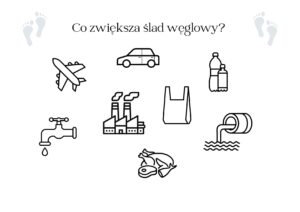
First, children receive two coloring sheets with symbols. One sheet contains symbols depicting objects and actions that increase the carbon footprint, while the other shows those that reduce it. The children’s task is to color in and cut out the pictures.
Next, the children trace their feet on two sheets of paper — one foot per sheet. One foot will collect objects and actions that increase the carbon footprint, and the other — those that reduce it. After that, the children’s task is to sort the pictures accordingly and glue them onto the traced footprints on the paper. Finally, the teacher leads a discussion about what changes the children can make in their everyday lives.


This post was created as part of a project co-funded by Deutsche Bundesstiftung Umwelt in cooperation with Naturschutzzentrum Oberlausitzer Bergland.
See More
 TupTupTup content and resources are free and available to everyone — thank you for using them.
If you appreciate what we do, you can support TupTupTup with a donation or by allocating 1.5% of your tax. Simply enter KRS 0000270261 in your tax return, adding the specific purpose: Fundacja To Proste 18808.