

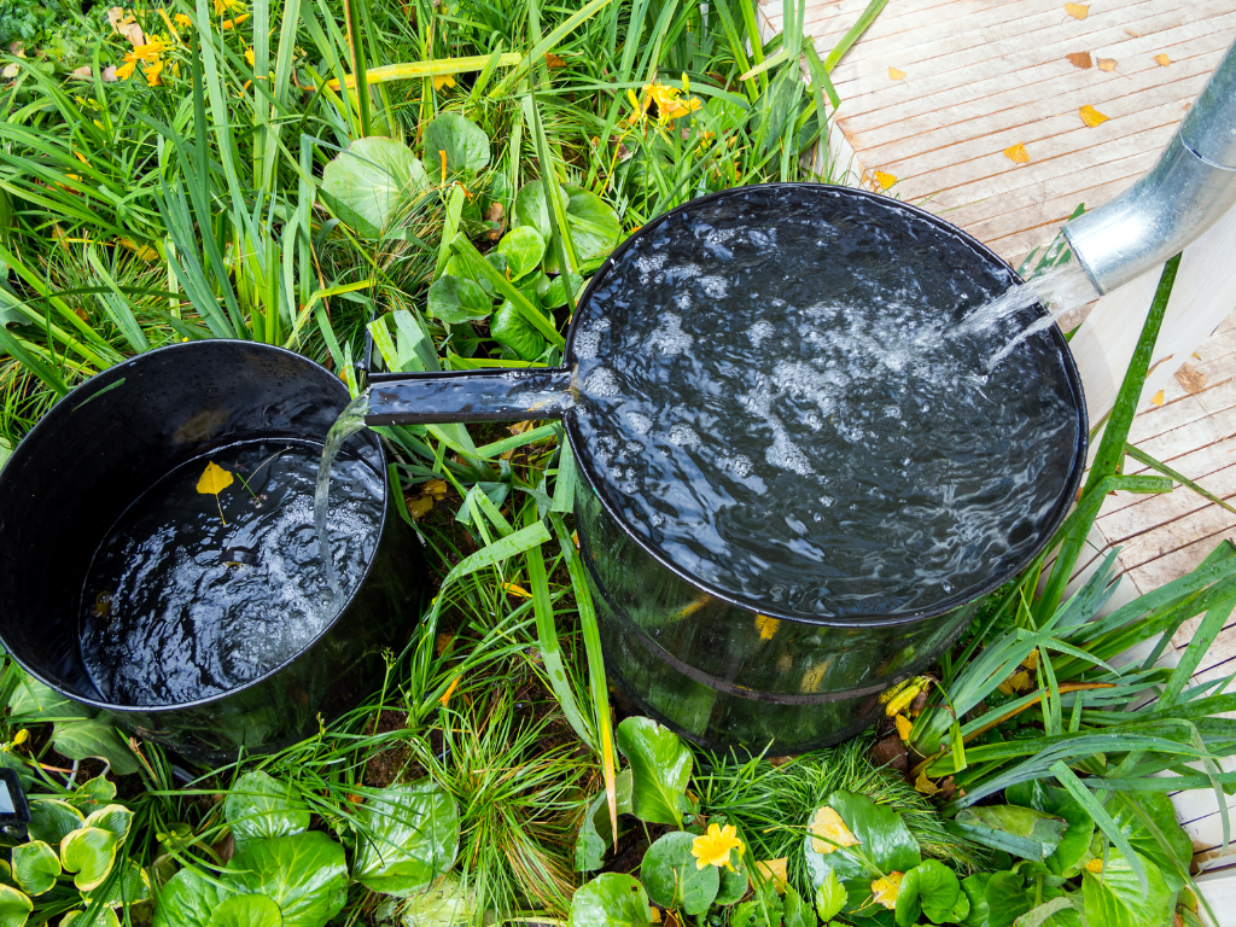
Retention, which is retaining rain in a place, in which it fell, is really important. If it’s draining too quickly it can clog the sewers, cause flooding and damages. In turn, in a place, from which water has drained away it can be a really scarce resource later. That’s why it is important to design buildings, cities and public places to hold as much water as possible.
We can later use the water kept this way, for example for watering patches or plants in the school. The easiest way to collect water is connecting gutters to barrels or water tanks. Water falling from the roof will be collected then and we can use it later.

MATERIALS
- Open gutter from the roof or another large area
- Movable water containers, for example, a big, solid watering can or pots
- A few bricks
Task Description
Before the rainfall, let’s discuss the pros of collecting rain with the youth. Some things worth mentioning are:
- Collecting water lowers the pressure on the sewers
- Collected water can be later used, saving water from the tap
- What we can use the rainwater for (watering plants, flushing the toilet)
- What we can’t use rainwater for (drinking, cooking)
Next, we put our water container in a place, in which water falls from a flat surface, and we put bricks around it from three sides. Bricks will prevent the moving or falling of the container during a strong storm or water overflowing from the container.
After the rain we collect our container and move it into a cool, shaded place. Now we can use the water to, for example, water plants at home or in a classroom.
Related

This entry was created in collaboration with Veolia Poland Foundation, CultureLab Foundation under the honorary patronage of the City of Warsaw.