

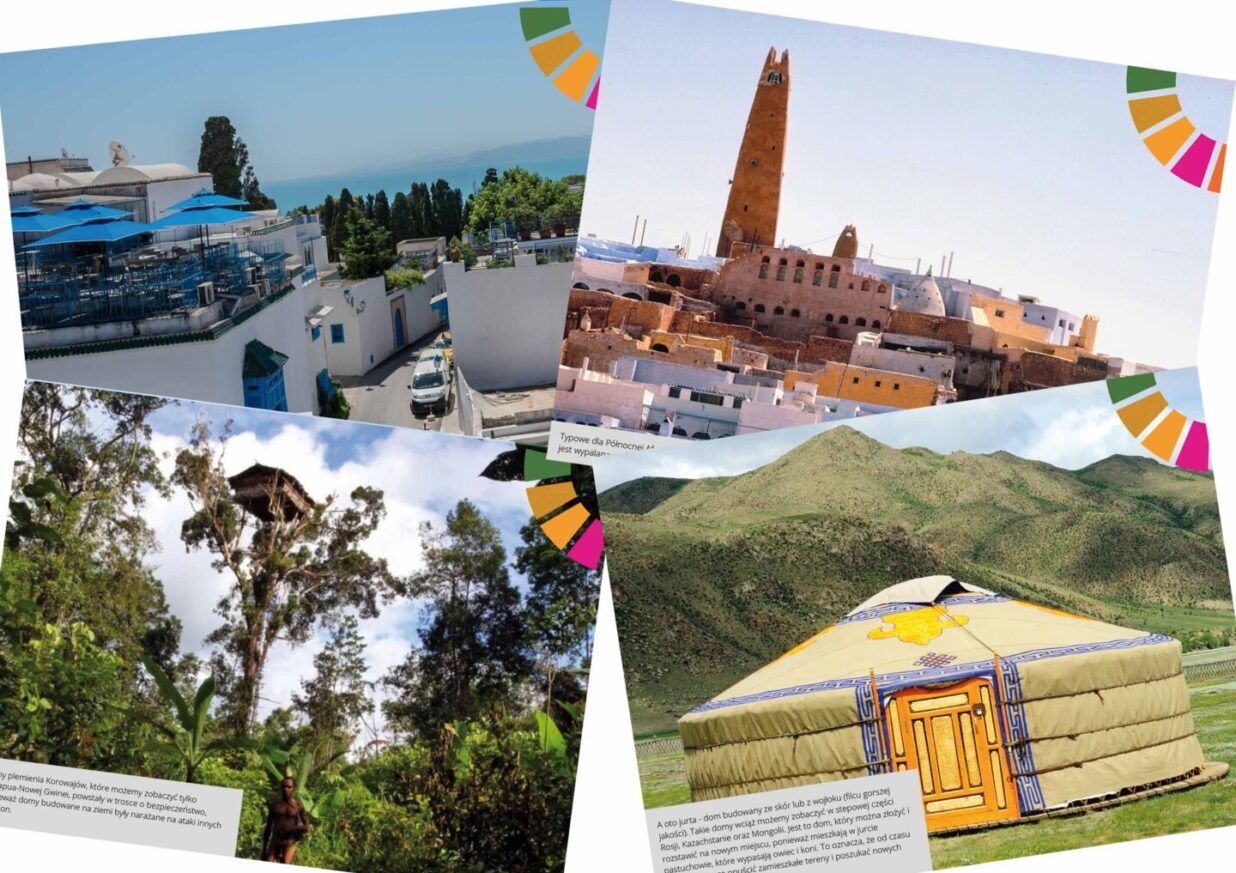
Today we present different types of houses from around the world, initiating a discussion about houses and their basic elements, highlighting the differences and similarities between them.
MATERIALS
- “Houses around the world” presentation (attachment 5.1)
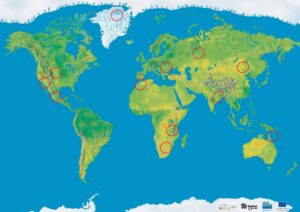
- the world map (attachment 5.2)
Instruction
Show the children the photos of houses from different parts of the world (presentation from attachment 5.1). Most of them are examples of traditional houses. Others are modern buildings, characteristic to chosen regions. Explain to the children the meaning of the term “traditional house” as a house built using centuries-old methods with basic building materials common for a given area (wood, clay, sticks, bricks, stones).
These buildings also fit perfectly into their surroundings. Discuss every house separately. Ask why this type of house was built in a given region. Have the children ever seen such houses? Then, let them try to show on the world map (attachment 5.2) where, in their opinion, the building in question may be located. Correct them if the answer is wrong.
Together with the children discuss the differences between the houses, e.g. whether all of them have windows and doors, if they are made of brick, hay or clay. Highlight the differences and similarities.
Follow-up questions
- What are the differences between these houses?
- What houses do you live in?
- Are these detached houses, twins or flats (make sure that the children understand the differences)?
- What if people did not have houses to live in?
- What if there were no streets in towns and cities?


Project is financed by European Union. This project is a part of global advocacy campaign of Habitat for Humanity aimed at improvement of access to land for a shelter.