

Air is full of pollutants. Some of them are products of natural processes, but most result from human activity. Among the natural causes of pollution are volcanic eruptions and forest fires. During spring and summer, pollen floats in the air causing allergic reactions in humans, and in autumn, fungal spores proliferate.
Let’s conduct an experiment that will allow children to observe natural air pollution.
Goal: show children examples of natural and human-caused air pollution by conducting an experiment
Time: 2–3 days
Experiment 1

MATERIALS
- a piece of bread
- a water sprayer
- a plate
Task Description

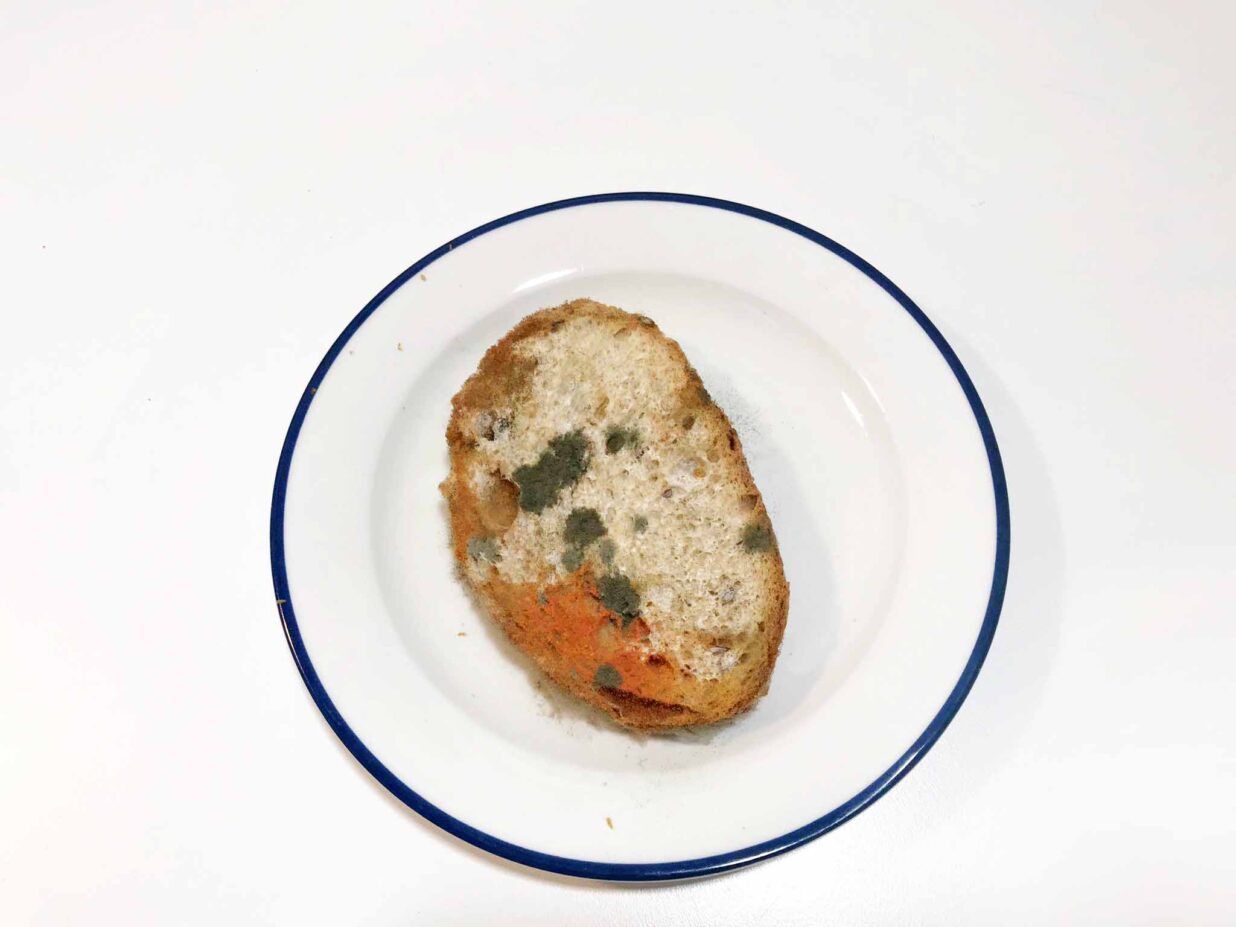
The teacher sprays a piece of bread and leaves it in a warm, humid place for a few days. It’s best to conduct the experiment indoors where conditions are stable and nothing interferes. After a short time, mould will appear on the bread. It came from the air. Although we cannot see fungal spores with the naked eye, they are present and reproduce quickly once they land on food.
The development of mould depends on the types of fungal spores present, the food composition, and environmental conditions (for example, high humidity and warm temperature promote mould growth). Remember that mould is dangerous to humans, so the mouldy bread should be thrown away after the experiment.
Let’s now move to air pollution caused by humans. Foundries, factories, power plants, households, and cars produce large amounts of various pollutants. We also pollute the air by spraying fields and forests to fight pests, harming ourselves in the process.
Experiment 2

MATERIALS
a vacuum cleaner
a cotton pad
a rubber band or adhesive tape
Course of the experiment


The teacher puts a cotton pad on the vacuum cleaner pipe and secures it with a rubber band or adhesive tape. They turn on the vacuum cleaner and wait about five minutes. This corresponds roughly to three days of human breathing. After five minutes, the teacher turns the vacuum cleaner off and removes the cotton pad. They show it to the children — it will likely have turned grey depending on the air quality in the room.
It’s best to conduct this experiment outside to observe the real state of the air we breathe. Remember that air quality is always worse in winter due to the heating season in single-family homes.


This post was produced as part of a project co-financed by the Deutsche Bundesstiftung Umwelt in cooperation with the Naturschutzzentrum Oberlausitzer Bergland.