


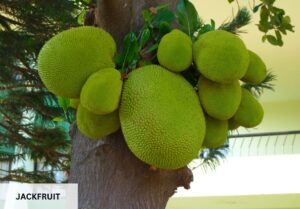
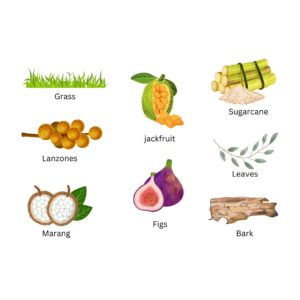
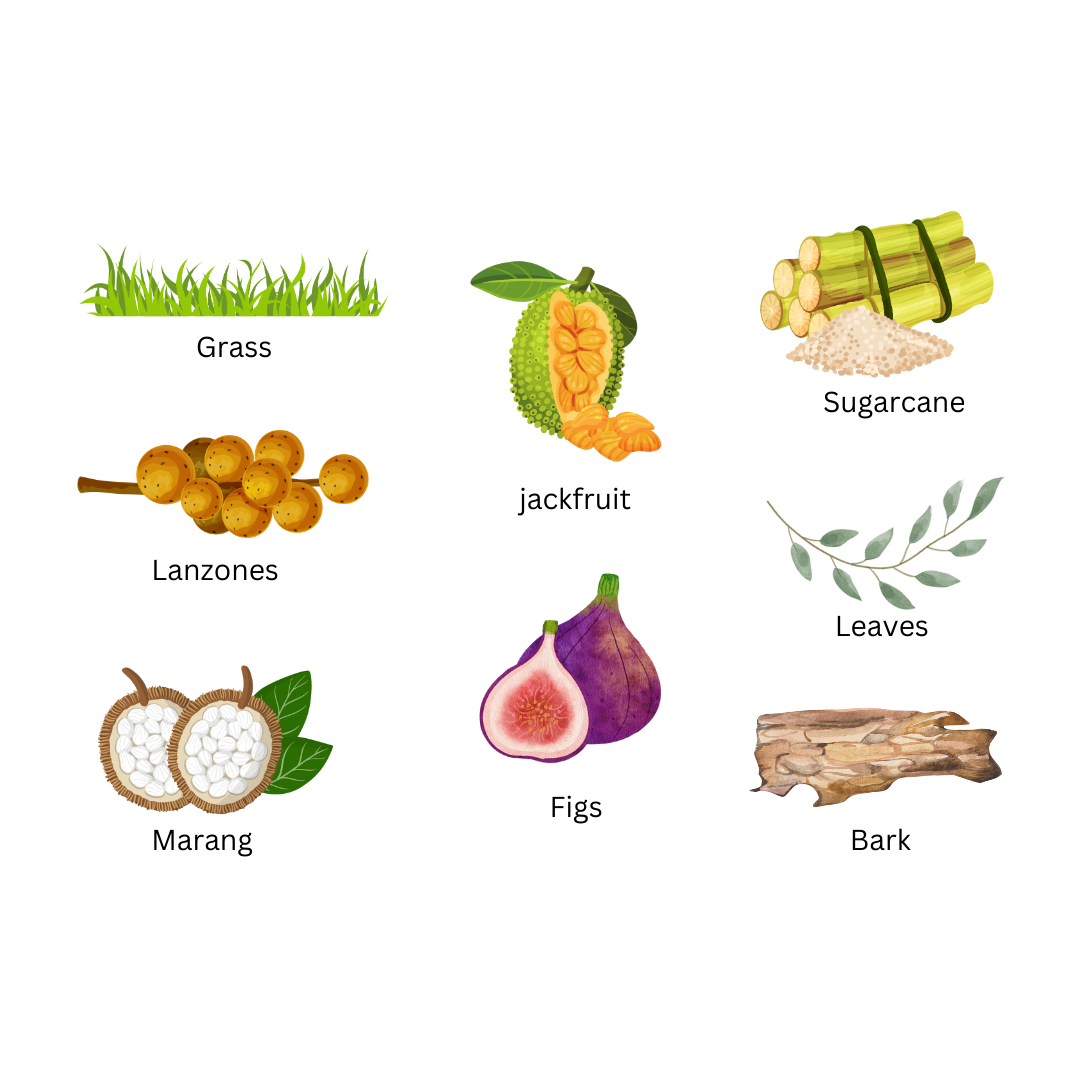
What do elephants eat? Kids can often imagine that an elephant eats fruits, probably because images like these are often in books. An elephant loves fruits, that’s true, but because of the fact it eats an enormous amount of food (sometimes even 200 kg every day), the animal couldn’t eat only fruit, that’s why it mostly eats grass and different parts of a tree – bark, leaves, stem. During this exercise, kids can learn the menu of the elephant and delicacies with which it willingly diversifies its diet.
Goal:
- Introducing children to the menu of elephants
Time:45 minutes
MATERIALS
- A picture of a sample menu of the elephant (Attachment 2.1)
- Drawings of the plants that an elephant eats (Attachment 2.2)
- Elephant template (Attachment 2.3)
- White paper A4
- Colorful markers or crayons
- Scissors
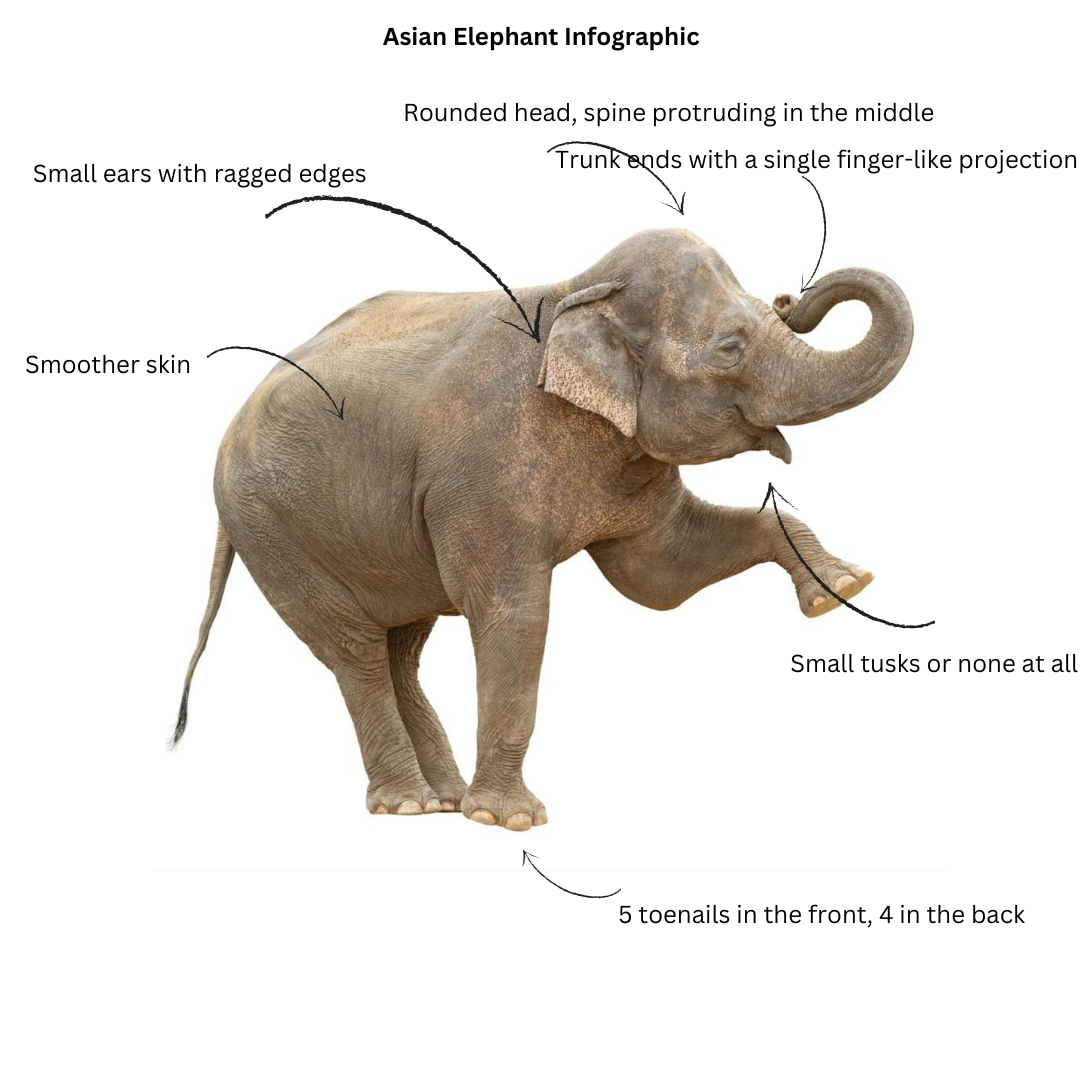
Task Description
As an introduction to the exercise, the teacher shows children pictures of a sample menu of the elephant (Att. 2.1). They discuss each of them and ask if any of the children have tried any of the shown fruits (e.g., a fig). Do they know where these fruits can grow? Do they need a lot of sun and water? It is worth mentioning that an elephant eats an unfathomable amount of food for a human each day, but sadly, most of this food is not digested and is consistently excreted.
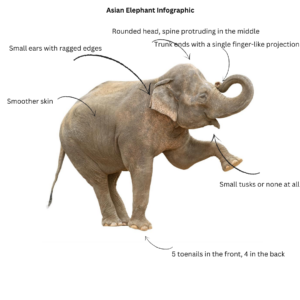
Next, the group moves to the execution of the task. The most interesting way of doing this task is in pairs. The teacher prints Attachment 2.3 – elephant contours in an amount equal to the number of kids in the group. Kids draw within the borders of an elephant silhouette (Att. 2.3) its food: it can be tree bark, grass, or some sort of exotic fruit. Hints for the elephant’s menu are in Attachment 2.2, and printing one per table is enough. After filling the elephant silhouette with drawings, kids cut their pictures along marked lines. Next, they exchange their cut pictures with classmates. The task of the classmate will be to count how many of each element the partner’s elephant has “eaten,” but first, the elephant has to be put back together, of course.

This post was created as part of a project co-financed by Deutsche Bundesstiftung Umwelt in cooperation with Naturschutzzentrum Oberlausitzer Bergland.